Understanding what motivates our dogs and how our reward choices influence their searching behaviour.
We spend a great deal of time thinking about how to set up searches for our dogs. Where should we place the target odour? How challenging should the search be? What environmental conditions might influence odour movement? What skill are we hoping to develop? But how much thought do we give to what happens when our dog finds the source?
We reach for the food pouch, produce a favourite toy, deliver our marker and celebrate another successful search. Over time, it can become almost automatic, the enthusiastic delivery not as dynamic as it used to be, and perhaps the reward has been something we have grabbed out the cupboard at the last minute without a thought. The type of reward, its value to the individual dog, how much we deliver, where we deliver it and the timing of that reinforcement can all influence learning and future behaviour. Understanding these differences can help us become more thoughtful trainers and, as importantly, more observant handlers.
Understanding Your Dog’s Reward Hierarchy
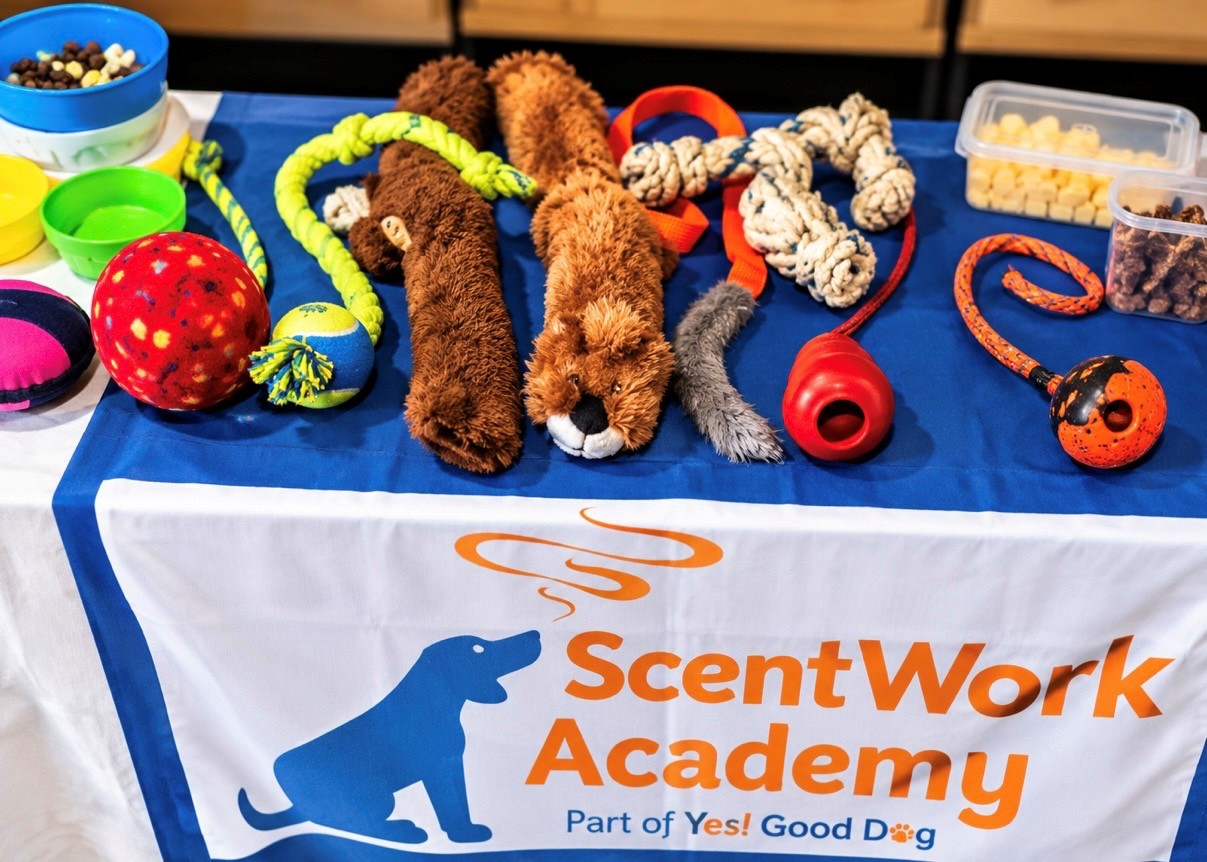
A reward hierarchy is simply an understanding of what your individual dog finds reinforcing. From those things they enjoy to those they find particularly valuable. For one dog, a favourite ball might be the ultimate reward. For another, a piece of chicken may be far more desirable. Some dogs enjoy an enthusiastic game of tug, while others prefer food delivered calmly and predictably. Something important to remember is that the dog determines the value of the reward, not us.
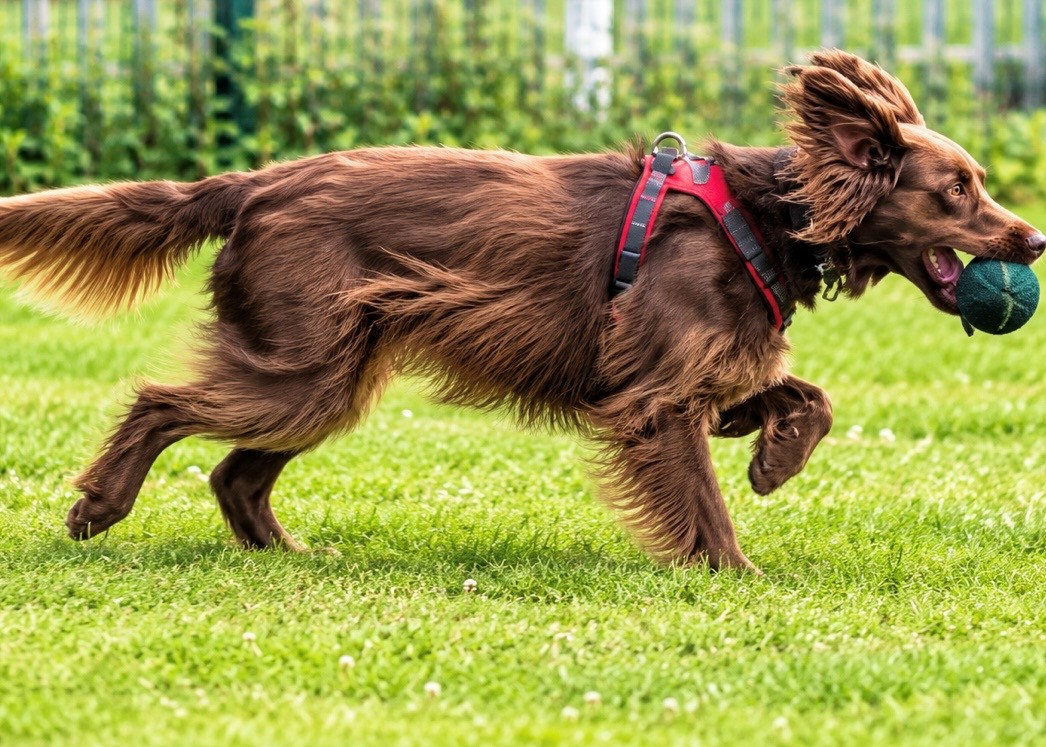
We might consider a particular food to be high value, but if our dog would rather chase a ball, that tells us something about their preferences. I personally fell into this trap, having had a food junkie retrievers previously, my latest recruit, is a HPR breed type, he values the chase, catch and grab far more. A common tennis ball was his absolute favourite, I had done nothing to reinforce this, it was simply another toy item, but to him it was his kryptonite The arousal went ridiculously high to the fact he could not concentrate when I had a golden tennis ball on my person. Food was a high contender too so I decided using food with the delivery of the chase aspect would be equally as effective. Motivation in the search was okay but there was a distinct lack of drive. Certainly, nowhere near the drive I saw when the ball was produced. With the instance from another instructor to absolutely use the ball as his primary reinforcer, I then worked through a training plan outside of scentwork for him to understand he had to work for this gem item. It wasn’t simply a fun item on the lounge floor he could kick around whilst holding a stuffy toy duck in his mouth, sounds a strange behaviour I know but it’s a breed-trait behaviour!
It took some preserverance for him to make the connection that working to find the target odour was the key to the marker and then delivery of his beloved ball, but we haven’t looked back since. The fuel tank was now at 100% and he searches with lust. That’s just my story, equally, a dog’s reward hierarchy is not necessarily fixed. What they value can change depending on their environment, emotional state, level of arousal, hunger, fatigue and previous experiences. A ball that is wonderfully motivating in certain environments might not cut the grade in a distracting location. A dog that normally loves energetic play might prefer high value food following a physically demanding search. Understanding these preferences gives us greater flexibility when planning training. It also helps us recognise when a reward is no longer having the effect we intended.
Reward Value and Reinforcement Schedules Are Not the Same Thing
Two terms frequently arise in dog training discussions: variable reinforcement and schedules of reinforcement. Although closely related in the reward system, they are not interchangeable. A reinforcement schedule describes when or how frequently a behaviour is reinforced. For example, under a continuous reinforcement schedule, every qualifying correct response receives reinforcement. This is particularly useful when teaching a new behaviour, such as establishing a clear final indication. Under an intermittent reinforcement schedule, only some qualifying responses receive reinforcement. There are several different schedules, including fixed and variable ratio schedules. A variable-ratio schedule involves delivering reinforcement after an unpredictable number of responses. However, changing the type or amount of reward after every successful indication is not the same as changing the reinforcement schedule.
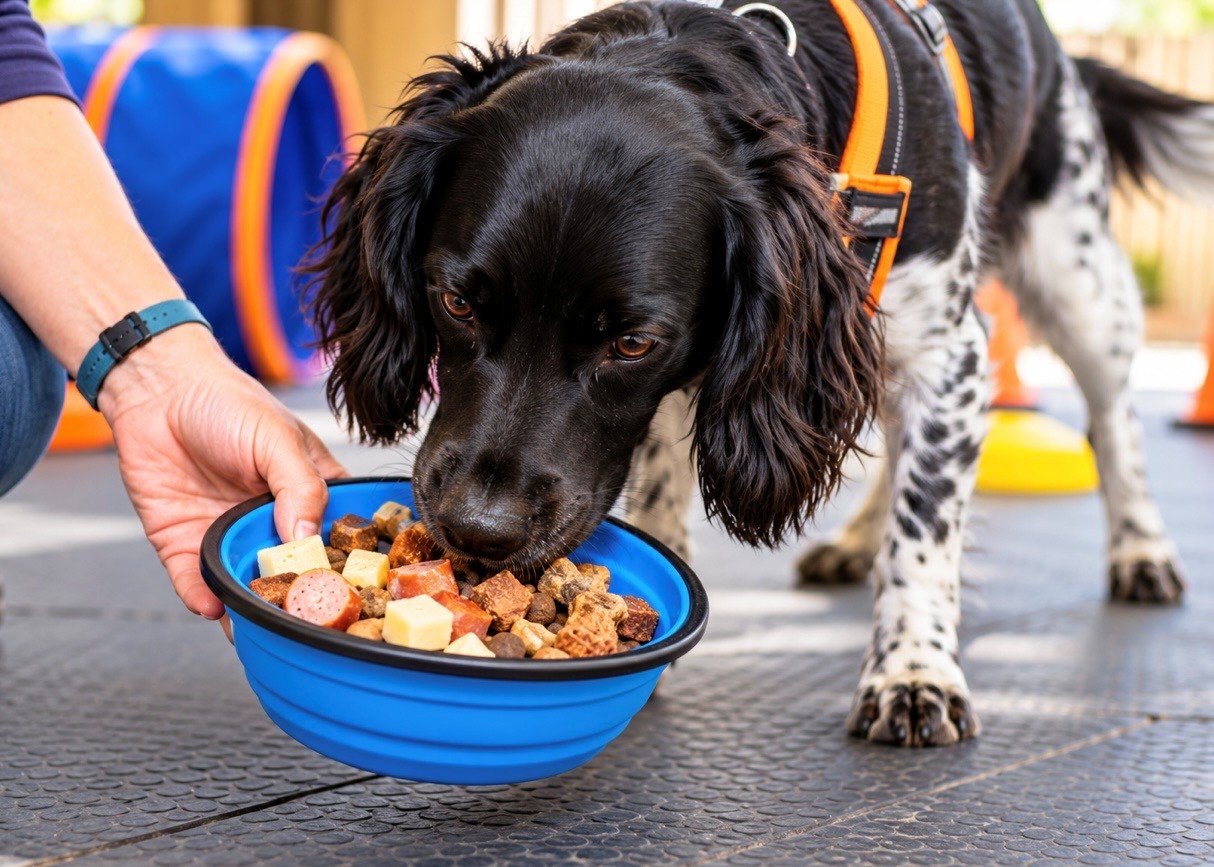
Imagine a dog completes three searches. On the first search, they receive a piece of chicken. On the second, they enjoy a game with their favourite ball. On the third, they receive several pieces of chicken delivered individually. If each correct indication is reinforced, the dog is still receiving continuous reinforcement. What has changed is the quality, type or magnitude of the reinforcement, rather than the schedule. This is an important distinction, particularly when we are trying to understand why our dogs respond differently to particular training arrangements.
What Exactly Is a Jackpot?
The term jackpot is commonly used in dog training to describe an unusually large, prolonged or particularly desirable reward following a behaviour. Perhaps our dog has completed a difficult search, worked through a challenging odour picture, succeeded in working through multiple finds or demonstrated an exceptionally accurate indication. We are delighted with their performance, so we offer several pieces of food or an extended game with their favourite toy. It feels like an appropriate way to celebrate their achievement. But does a bigger reward necessarily strengthen the behaviour more effectively? Although jackpots are frequently recommended in dog training, scientific evidence supporting their effectiveness remains limited. Research by Kuroda and colleagues (2020), involving rats and pigeons, found that unusually large or valuable rewards did not consistently improve behavioural performance. Interestingly, a small study involving two domestic dogs (Muir, 2010) found that jackpots did not clearly increase response rates during a single task, although the dogs showed a preference for an option associated with jackpot reinforcement when given a choice. A subsequent scientific review by Lattal (2020) highlighted the lack of consistent experimental evidence supporting the special benefits often attributed to jackpots.
This does not mean that delivering a larger or particularly enjoyable reward is ineffective. Rather, it suggests that we should be cautious about assuming a jackpot automatically produces better learning. For scentwork handlers, the practical message is to observe the individual dog, consider the behaviour being reinforced and evaluate whether a particular reward strategy actually improves subsequent performance. There is another consideration.
Does the dog understand which behaviour earned that unusually large reward?
A search might involve several minutes of independent hunting, changes in speed, adjustments to odour movement, moments of uncertainty and finally an accurate indication.If we deliver a jackpot at the end, we cannot assume the dog associates that larger reward with every aspect of the preceding search. The most immediate and clearly marked behaviours are generally those most likely to be associated with the reinforcement. This is one reason why timing and clarity are so important.
Rewarding the Behaviour, Not Just Celebrating the Result
As handlers, we naturally feel proud when our dogs overcome a difficult challenge. Perhaps they have worked an odour plume over a considerable distance, followed it around an obstacle, investigated several possible locations and eventually identified the source. It is fascinating to watch, but from a learning perspective, we need to ask ourselves what we were actually trying to develop. Was our training goal accurate source identification? A more sustained indication? Independent searching? Confidence around a particular environmental challenge? These are different objectives, and our reinforcement strategy should reflect the skill we are teaching. If we are working on indication duration, for example, accurate marker timing can help the dog understand precisely which response is earning reinforcement. If we are developing independent searching, we also need to consider our handling, search difficulty and the dog’s history of successful reinforcement. This is where thoughtful training plans become so valuable and within training scenarios, I particularly like the use of one hide placement, working on one aspect and one outcome.
Could a High-Value Reward Influence Search Behaviour?
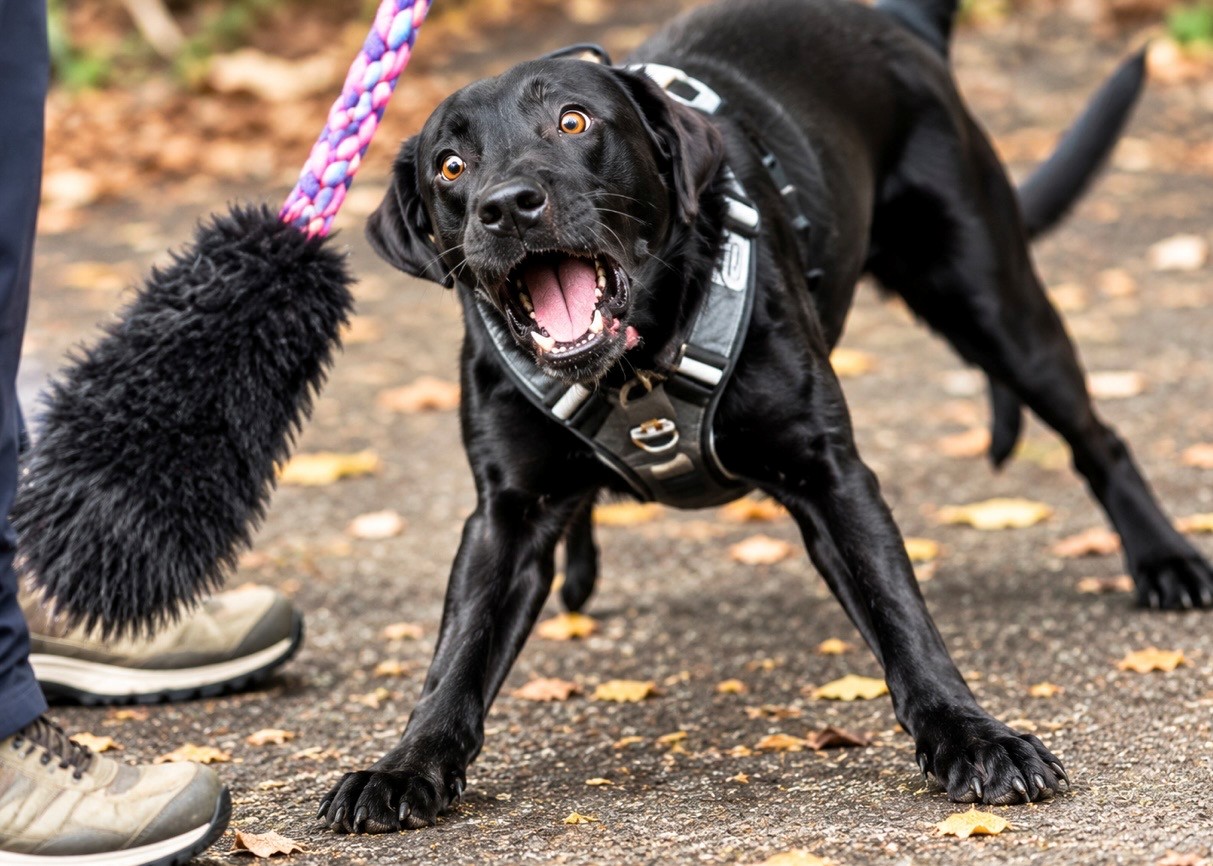
Taking you back to my experience with the kryptonite tennis ball, yes absolutely, but not always in the way we expect. When considering a dog whose favourite reward is an exciting game with a ball. That ball may be an excellent reinforcer, encouraging enthusiasm and a willingness to engage in the search. However, as with my dog, for some dogs, the anticipation or delivery of a highly exciting reward may also increase arousal. We might then notice the dog beginning the next search at greater speed, investigating less thoroughly or finding it more difficult to settle into a methodical searching pattern. This is exactly why I shied away from it to start with. That does not mean the ball is the wrong reward. It means we need to observe the effect it is having on the individual dog. For another dog, the same reward might produce exactly the enthusiasm and persistence we were hoping to develop. There is no universal answer because our dogs are individuals. Rather than asking whether food or toys are better, perhaps we should be asking:
What effect is this particular reward having on my dog’s searching behaviour? Think about that for a moment. It opens up so many possibilities with the reward hierarchy/
Should We Use Intermittent Reinforcement in Scentwork?
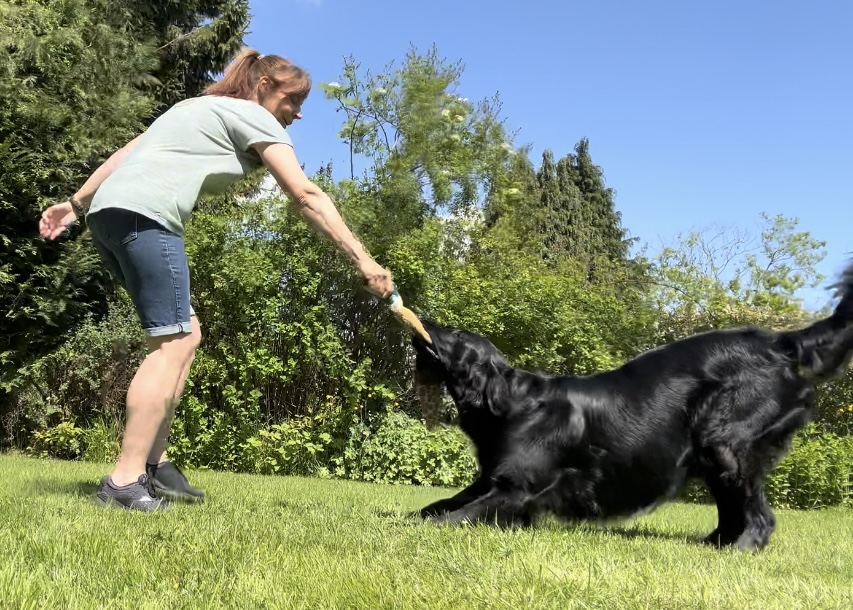
Intermittent reinforcement is often discussed as a way of maintaining established behaviours, but its application requires careful thought. In operational detection, dogs may encounter situations where an indication cannot always be followed by their usual primary reward. Training programmes may therefore prepare dogs for these circumstances. However, this does not mean companion dog scentwork handlers should routinely withhold reinforcement following correct indications. When we are teaching odour recognition, developing indication clarity or refining accuracy, a consistent reinforcement history is particularly valuable. The dog needs to understand which behaviour produces the desired outcome. If a dog accurately identifies the source and offers the trained indication, withholding reinforcement without a clear training purpose may introduce uncertainty rather than improve reliability. We should also remember that searching an area containing no target odour is different from correctly identifying target odour and receiving no reinforcement. These situations have different learning implications. For companion dog scentwork, where we want to develop confidence, enjoyment, clarity and reliable teamwork, I believe consistency should remain a central consideration.
Putting Reward Hierarchies Into Practice
One useful exercise is to explore your dog’s reward preferences and then observe how different reinforcement arrangements influence subsequent searches. Start by identifying three rewards your dog genuinely enjoys. These might include a favourite food, a toy and another food of a different value. Rather than immediately introducing them into increasingly difficult searches, begin with simple, familiar exercises where your dog is already successful. Keep the target odour, search environment, hide accessibility and indication criteria as consistent as possible. Change one aspect of the reinforcement at a time. For example, you might compare your dog’s usual reward with a different reward of known value, or explore whether a slightly longer reinforcement event changes their motivation. Observe the next search carefully.
Does your dog return to searching willingly? Are they methodical? Does their speed change? Are they remaining accurate at source? Do they appear more engaged, or are they becoming increasingly focused on anticipating the reward? One search will not give a definitive answer, and we need repeated observations before drawing conclusions. Nevertheless, this exercise can encourage handlers to become more aware of the relationship between reinforcement and behaviour.
It is also a reminder that the most exciting reward is not automatically the most useful reward for every training objective. For more steady work, like pot runs and container line up’s I use food reward (the next best) in preference to the ball, linked with a different cue to search and a different marker. This has worked well and is clear to my dog what is expected in this type of search criteria and he also anticipates a high value food not the ball throw.
Reward Placement and Delivery Matter Too
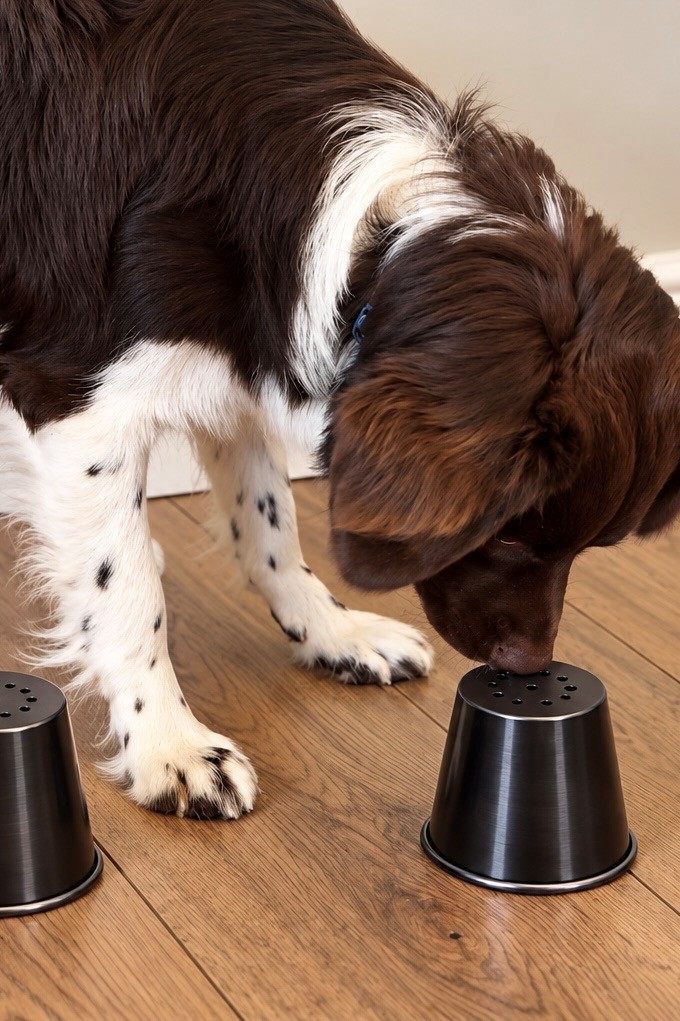
There is another important element, where and how we deliver reinforcement may be just as significant as what we deliver. Consider a dog learning to maintain a precise indication at source. If we repeatedly move our hand towards the reward pouch before marking, we risk introducing an additional cue into the behaviour. If we deliver food away from the source when our intention is to strengthen sustained source commitment, we need to consider what the dog is actually learning. Likewise, an exciting rapid toy presentation might encourage movement away from the source, which may or may not suit our training objective.None of these choices is automatically wrong. What matters is that they are intentional. Good reinforcement is not simply about making the dog happy, although enjoyment is an important part of our training. It is also about providing clear information, what behaviour are we actually rewarding and does the dog make the connection?
What Does the Science Suggest?
Research into reinforcement demonstrates that reward magnitude, reinforcement schedules, timing and learning history can influence behaviour. However, their effects are not necessarily straightforward, and findings from one species or training context cannot automatically be applied to another. Experimental research into jackpot reinforcement has not established a consistent special benefit from unusually large rewards. Research involving detection dogs has also highlighted the importance of clear communication, including the use of marker signals during training.These findings encourage us to look beyond the size of a reward and consider the wider reinforcement arrangement.
For further reading, relevant research includes the following : Links are attached
1.The Effects of Jackpots on Responding and Choice in Two Domestic Dogs (2010)
Kristy Lynn Muir — University of North Texas
2.An Experimental Analysis of Jackpot Reinforcers (2020)
Kuroda, T., Roca, A., Hall, E. G., Jarmolowicz, D. P., & Lattal, K. A.
Published in the Journal of the Experimental Analysis of Behavior, 113(3), 565–590.
https://pubmed.ncbi.nlm.nih.gov/32239531/
3.Big Surprises: Jackpot Reinforcers in Research and Practice (2020)
Kennon A. Lattal
Published in Behavior Analysis in Practice, 13, 1000–1008.
https://scentworkacademy.co.uk/wp-content/uploads/2026/10/Big-Surprises-Jackpot-Reinforcers.pdf
All three provide useful starting points for exploring reinforcement more critically. None of these studies establishes whether jackpots improve scent detection accuracy, source commitment or indication duration. Those would require specific research involving scent detection dogs. Big Surprises: Kennon A. Lattal is the most relevant to dog training
A Final Thought: Understanding Before Complexity
One of the principles I frequently return to in my teaching is understanding before complexity. Before making a search more challenging, we need to ensure our dogs understand the task and have developed a strong history of successful learning. The same principle applies to reinforcement. Before experimenting with jackpots, varying reward value or changing reinforcement schedules, we should understand what our dogs find reinforcing and what behaviours we are trying to strengthen. That it provides the clearest information, supports the dog’s motivation and helps them approach their next search with confidence.
So the next time your dog completes a particularly impressive search, by all means celebrate that wonderful achievement together. But also take a moment to consider what you are reinforcing.
Are we rewarding the behaviour we want to strengthen, or simply celebrating the result we enjoyed watching?
That small shift in thinking can make a meaningful difference to the way we train.
Mandy Rigby
Canine Scentwork Academy
Copyright 2026 Mandy Rigby
Helping companion dogs and their people discover the extraordinary capabilities of the canine nose, through thoughtful training, understanding and connection.