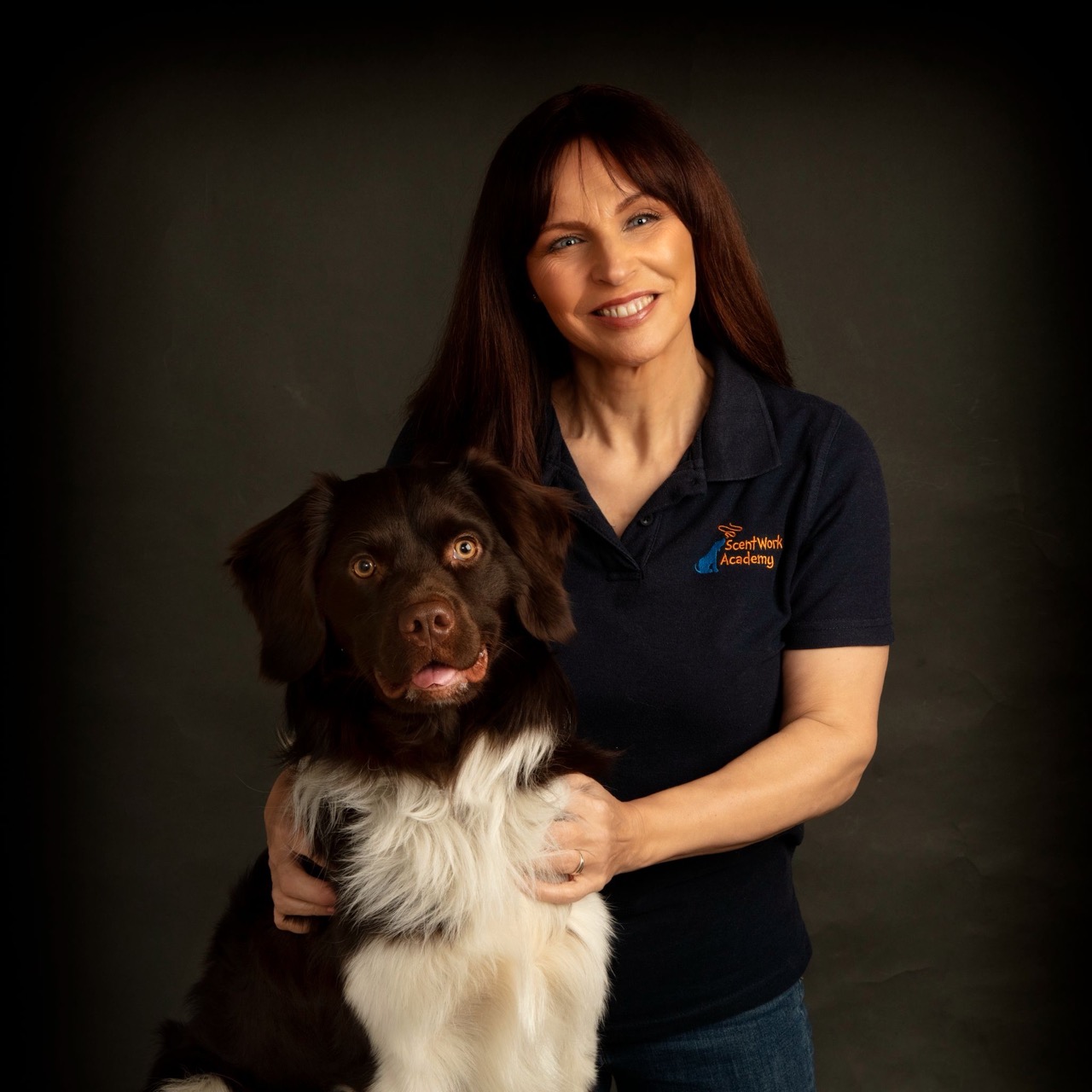
When I first started out in scentwork, there were only two relatively new organisations in the whole of the UK, and just a small handful of people with real operational experience advising the sporting side of things. At the time I was working full time, as a canine beahaviourist, I became hooked on scentwork training and took my first steps to become an instructor, there were still only around a hundred trainers within the organisation in the entire country. Back then, we all wanted the same simple thing, to bring people into this sector of dog training, to meet likeminded people and have competitive fun with their dogs.
Fast forward a few years and the landscape has changed beyond recognition. Techniques have been refined, methodologies have multiplied, and the pool of advisors from commercial, conservation, operational and sporting has grown ten-fold.
This is an article, a bit of a story that I have wanted to put together for a while now and a recent training event I attended not as the trainer, as a handler has promoted those reflections to finally be put to paper, and I hope it resonates with some. Here goes, and I will be honest with you from the start. Being on that side of the fence as a student with your peers in the Industry stirs up a bit of imposter syndrome, even when I feel comfortable with the Instructor hosting. I used to worry about this much more and not push my bubble out, but now I ride with it out and put it down to perfectly natural feelings. I book and go anyway, because what I get back is worth far more than the wobbles.
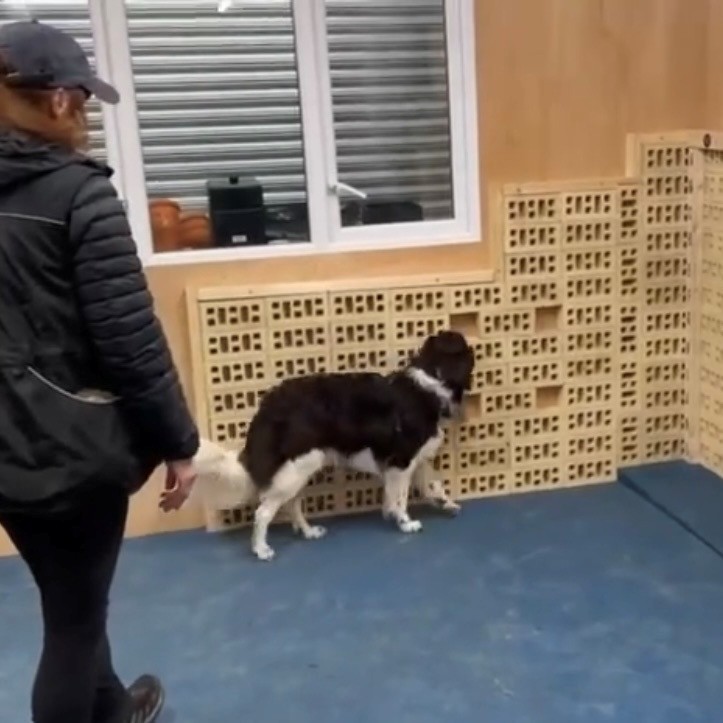
I want to do well at scentwork for my newest boy. For Rusty. And if putting myself under another trainer’s eye is what helps him be the best he can be, and me be the best I can be for him, then that is what I will do.
I have been to train-the-trainer days, and they are valuable, but a far different experience. But I do like standing among the other handlers and their dogs, experiencing it exactly as they experience it. The same difficulties come up, the same little problems, the same conversations. You hear the chat, feel what they feel and gain a different perspective.
For this event, I arrived with a headache that had been throbbing for three days. I felt a bit musty, truth be told. But after the month we’ve had with Reenie’s cancer diagnosis, being stressful, tearful and worried, all my thought and time has poured into her. This session had been booked for a while, and I was not going to miss it. I sorted care for Reenie, and Rusty and I went.
Rusty hadn’t had much dedicated scent work time lately, and we haven’t had much one to one time either. Now here’s the thing about being a trainer with your own dog: you set your own hides, so you always know where they are. Without meaning to, that influences everything. You miss the subtle body languages because you are watching for the obvious. You are often rushing the setup because life is busy. And because I am so careful not to influence his search, I rarely work him on line, which means we are missing that whole link in his training.
My aims for the day were simple: watch his more subtle body language to be able to read him better, and to work him on line.
A bit about Rusty
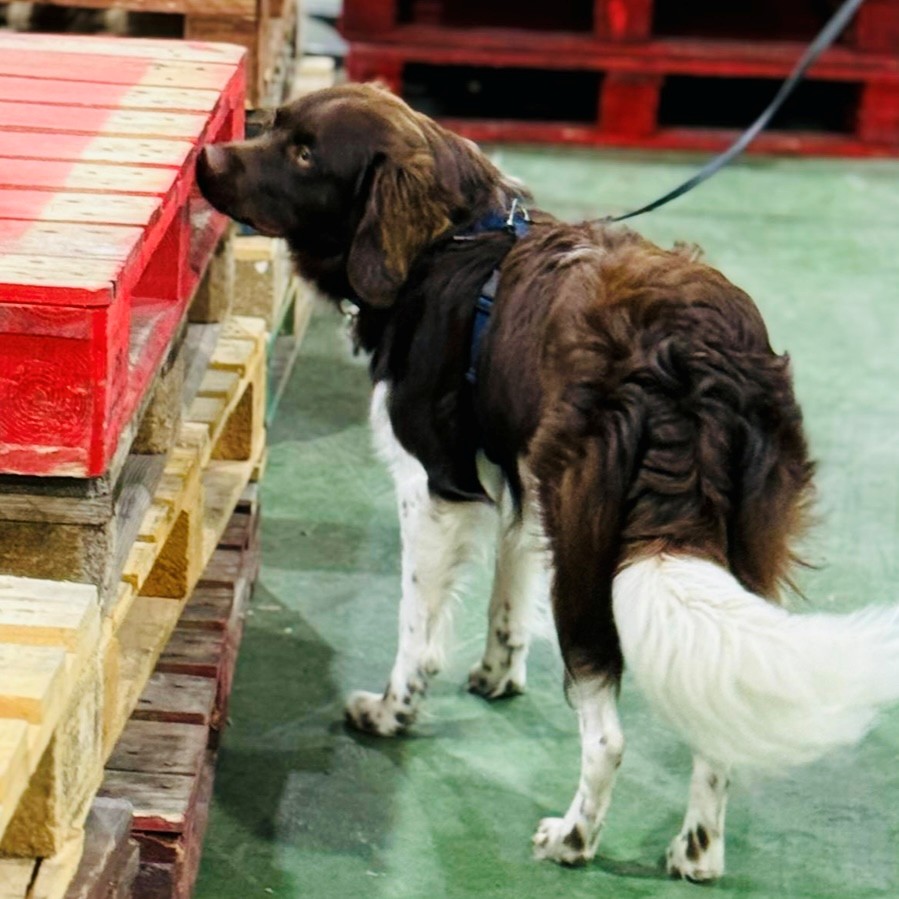
His first year, he wasn’t a confident boy at all. Wary, unfocused, wouldn’t settle into a search. So we built confidence first. Scent work outside of the home came later, in the latter part of last year, and he gradually grew, coming to my classes, working around other dogs, finding his feet.
This year, his second, he’s just turned two. We have started trialing. But I have deliberately only considered his confidence so far. I haven’t wanted to put much of me into it. I wanted the search to be dog-led, for two reasons. First, so he could gain the confidence that he could genuinely do it; and second, so I could see his true potential. How far away is he picking up odour? Does he have the confidence to follow it through, without any instruction from me? How distracted does he get? What worries him that he avoids?
He’s what I would call a quiet dog. He gives very little away while searching, until he gets into odour, and then it becomes a little quicker, tail rises, he becomes more animated, almost joyful. Why so quiet? Partly his breed type, perhaps? He is a rare breed, so I have nothing to compare him with. Partly his personality I think, he’s never wanted the limelight. As a puppy he would sit quietly, not wanting other dogs to spot him. He was Mr Invisible.
And then I think about it from the dog’s perspective. If a wild dog latched onto the scent of prey to pursue, or a possible meal of dead meat. Would they want the whole pack to know? Or would they quietly slip off and suss out where it is? Rusty is very much that dog. He’s a real petty thief, leave something lying around and he will slope off and quietly pinch it. I call him Fagin’s dog. We laugh at home saying we should have called him Robbie instead. He searches exactly the way quietly, thoughtfully in the background, until he’s got it.
So I never wanted to influence that. I just wanted to observe him.
What this day taught me
Here’s where it got interesting, and one of the trainers put her finger on it, we have turned a corner. She questioned why I was doing things a certain way, and she was looking at the confident dog in front of her, not the history I carry in my head. And that’s the thing, isn’t it? You go from the dog’s history, but sometimes you have to let the history go, because it’s the past now. That work has been done.
So now, instead of letting him range free and freestyle, I can start working with him covering sections of an area systematically so they are done and dusted, and we can move on confidently. He’s not the fastest, but once he’s on it, he’s a very persistent, determined search dog. Then came the second gem. On the next search with a different experienced trainer, there was a difference in my marker and reinforcer was tiny, literally by about a second. And it was spotted. You cannot see that in yourself. You need other eyes, experienced eyes on you.
So, by the third search I had two things in my head, the systematic coverage, and the marker timing. We went back on the third search to work on coverage, and I still worked him on the long line. The easy route would have been to let him off and just watch which areas he missed from a distance, but today I didn’t want the easy route. I wanted to benefit from the session.
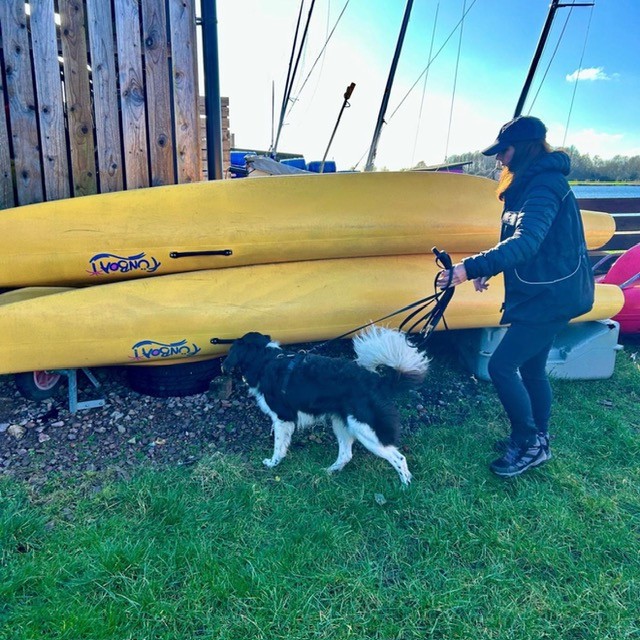
And here’s what happened, I was so busy checking coverage and watching his body languages, in which I know we improved from the previous search as there was many different areas to cover, but indication quality suffered with now marking too quickly! There were a couple of times he pulled me straight to odour and I read it beautifully, but then I didn’t leave him long enough, because my mind was racing ahead to get the marker word out before my shoulder movement cued him, advised from the previous search.
Which highlights something so important: when you are applying one new thing, something else will suffer that day, until you have properly processed it, practised it, and brought the two together. It won’t all happen at once. And the same is true for the dog,. On the fourth search, with the marker timing and duration firmly in my mind to get it correct this time, my mind went blank. I knew the behaviour I wanted to see, and didn’t consider the complexity of Rusty sourcing an inaccessible hide, asking me to open the door and then indicating. Here comes the balance and thinking and implementing on the spot. This time I should have taken it and not asked for even closer precision. Meanwhile, I’m also thinking about the search pattern and covering the area. Too many focus balls in the air for my aching head.
There were plenty of personal wins too, Rusty climbed over things, went into confined spaces, checked out highs, started the search well, and searched whilst there were people around chatting. The one gem I will not forget is the moment he had lost any trace of the target odour and he lifted his nose high, taking deep sniffs to see if he could catch hold of anything. He had improved stamina, determination and was motivated to search. I could not have been happier with his efforts.
My takeaway, as well as the very constructive comments, was it’s given me real appreciation for my own clients and reminded me once again not to overwhelm. You can only concentrate on one thing at a time when you are changing your own mechanics. Perfect that before you add the next. Also, if the owner is changing their handling, imagine how that lands on their dog: “we didn’t do that last time, this feels a bit weird.” Take advice on board, but it doesn’t mean you need to implement straight away, on the session, concentrate on one thing at a time; come back to the other aspects later.
Why I put myself under the microscope
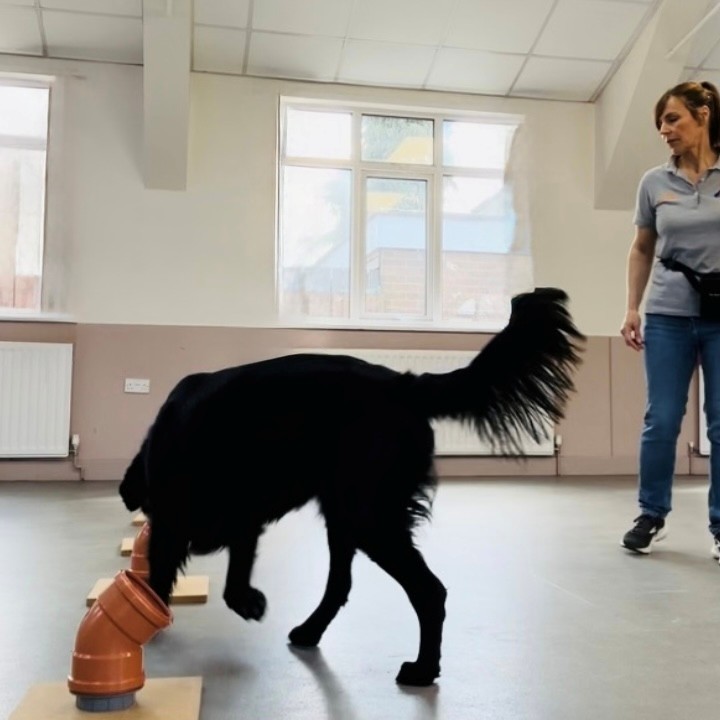
I have done many sessions this year with other trainers. They are all different but equally as awesome. I want people to tell me what they see and be honest so I can improve to support my lad. Yes, I train a lot of people and see a lot of dogs, I will spot things another handler or trainer might miss, and I can advise on it. But when it comes to yourself, putting yourself under the microscope as a trainer is quite a brave thing to do. What pushes me through is my love of the activity and my love for Rusty and his progress.
And I never want to be too big for my boots. At the end of the day, I’m a dog mum. I instruct people to train their dogs in scent work, I have grandchildren, presently a terminally poorly dog. I want to stay humble in this activity. You never know what people are carrying with them that day, what’s going on in their lives now or in the past. I want people to feel they can approach me about anything; I am not on a pedestal, kindness is a non negotiable.
That’s why I want other handlers to see me out on the circuit with other trainers. It’s a window into the scentwork world, we can train with each other, support each other’s businesses, and not hold ourselves as elite. For me, it’s about transparency, and I would encourage any instructor who can do the same to do it. It keeps you on both sides of the coin, student and instructor.
Of course the imposter syndrome is still there. The not-feeling-good-enough. And there’s that little anxious monkey voice, these trainers see each other, are they talking about me? But then I remember: I wouldn’t do that. If anything, I would shout their praises louder for what they bring to the scent work community. And I have to trust the people I choose to train with are as ethical as I am. Your own mechanics are the one thing you never get eyes on, and having someone else’s eyes on them can only help.
To those who see trainers as competing businesses, there’s a big pool of people out there. The more I am seen as not so much collaborating, although I am always open to that too, but more having a respect for what others are doing in the scentwork training sector the better. We all want the same thing, people to introduce their dogs to scent work and have a great time within a friendly network of people. Us seen to be doing that in neighbouring counties and further a field can only be a positive contribution to the sporting and hobbyist activity. I view it as the more my own clients think, “oh good, we will go to that trainer too, if Mandy goes they will be good and as importantly, pleasant folk too”, and I have absolutely no problem with that. We don’t keep clients in a little closed casket. The more help people can get, from more different people, the better.
One more thing
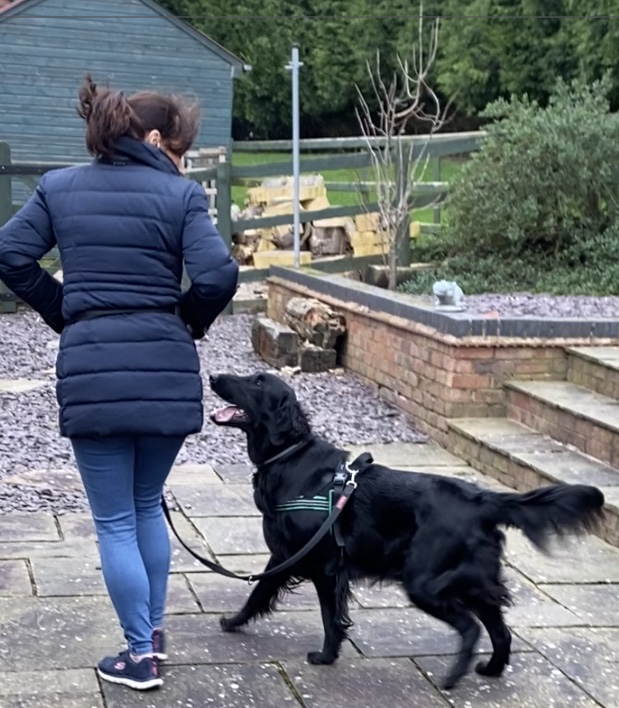
Scentwork is not an ABC of learning, it’s a rollercoaster. of a journey. Every search is different, even in the same area. You are not drilling a repeatable sequence of behaviours. You are constantly balancing fluctuating scales of skillsets for yourself and your dog, this is not to shy away from, it’s totally fascinating and addictive. You are working with the most incredible species and your best friend, and every single time it’s new. You have to observe well, and think on your feet, and you are not always going to make the right choices, nor is your dog.
Although of course totally dog obsessed, I am very much a people person, more so actually on becoming involved in this sector, my strength as a trainer is reading behaviour, often around what the handler is doing and how that affects the dog. Every dog teaches us something, Reenie was so motivated she just wanted to do the job, it was about harnessing that, not training her to search. But her indication came at a price, and that journey through every indication behaviour you could possibly encounter is why I feel I have earned real experience in passive indication training. And Rusty, I’m absolutely sure he was sent to me to improve other skills.
OH, and some dogs are just bloody awesome in their own right, aren’t they? Born to sniff, born to search, working high and low like ready-made sniffy machines. The hobbyist pet world isn’t always like that, and I have learnt so much from different breeds and styles over the years, as well as people’s learning styles and capabilities.
Thank you
So to end my musings, a big shout-out to all the scent work instructors who have accommodated me over the year. You know who you are, thank you. I hope you have equally gained from our experiences together, because watching what unfolds in other people’s searches is what makes all of us better.
Take the advice without taking it personally. Receive it as it was given. And enjoy your scentwork as a trainer and as a handler.
Mandy Rigby
links