My Tips for Helping Your Dog Cope With Environmental Worries During a Scent Work Activity
Can your dog continue searching? Whether it’s a noisy tarpaulin moving in the wind or something else unexpected within the environment, a sudden sight or sound can concern even a confident dog. If your dog becomes frightened and shuts down during a search, that experience can easily become “a thing.” As handlers, we may feel anxious whenever we encounter a similar trigger, and our dogs can notice that change in us too. So, what can we do in the moment to support our dog without adding pressure? And how can we gradually build their confidence and resilience for future searches?
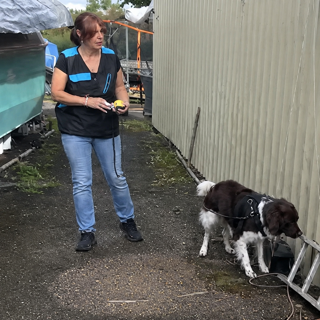
I recently worked Rusty, my young search dog over a search area prior to my clients dog’s running the search. The outdoor area was surrounded by a few large tarpaulins. The wind was unpredictable, so movement and noise happened without warning. It gave me a valuable opportunity to observe his response, make thoughtful decisions and work at the level he could manage. This promoted some thoughts around how owners of dogs that can be sensitive to movement, the sights or sounds of the ‘odd’ that maybe within the environment when their sensitive dog is searching
First, what should you do in the moment if your dog becomes too frightened to continue searching?
If your dog shuts down, personally I would end the search calmly and move them away from the situation. Once their survival response has taken over, creating distance and feeling safe will be far more important to them than locating target odour. This is not the time to persevere or try to convince them to search. You can work on the concern separately, at a level your dog can comfortably manage.
Here are my top tips:
1. Build confidence away from target odour
Play games using toys and food in different places and around new objects. Leave the target odour out of the picture until your dog’s confidence has improved in the particular aspect you are working on. You can also try pattern movement exercises as a general confidence and cognitive-strengthening activity. Predictable movement patterns can help dogs think, move with purpose and become more comfortable working through their environment. You will find resources for these under Movement Puzzle on YouTube or their website ‘The Moving Canine’.
2. Begin in a familiar, safe environment
Your home and safe familiar surrounding areas can be a useful stepping stone. It feels familiar, but your dog can still experience some exposure to external factors such as traffic noise, people, doors closing and other everyday sounds. Begin with simple play or movement exercises before introducing a few easy finds.
3. Use naturally occurring sounds carefully
A n eighbour’s lawnmower, bins being moved or nearby building work can provide gentle exposure, but only from a distance where your dog can notice the sound or sight (both), and remain comfortable. I have personally used this factor whilst neighbours erected an extension over a few weeks and another had large trees felled. Both my dogs were supplied with yummy long lasting chews whilst the chipper churned away outside the window.
*You don’t need to wait for your dog to react before creating more distance. Watch for the smaller changes in their body language and respond early.
4. Keep target odour away from the concern
When you reintroduce scentwork, don’t place the scented article, close to, or on items that could move or topple. If underfoot stability is an issue for your dog ensure another route can be chosen. Your dog should never feel they must approach something frightening to access the hide or their reward. Start well away from it and gradually reduce the distance over several sessions, always guided by your dog.
5. Create a much smaller, controllable version
Rather than beginning with a large tarpaulin flapping loudly, place a small sheet or piece of material (towel) securely in your garden. Start with little or no movement and simply play or complete familiar movement patterns nearby. Once your dog is genuinely comfortable, introduce a few easy finds at a safe distance. Over time, you can add a tiny amount of movement or sound, but change only one element at a time.
The aim is not to make your dog “get over it.” It is to give them manageable experiences where they can notice something, remain able to think and discover that they are safe.
When all said and done, your dog is an individual, sudden happenings can affect even the most confident of dogs, it’s how quickly they can recover is an important factor and something we can look to help with. An increased confidence does not happen over night, it’s an accumulation of small repeated events that have happened at low level with no negative outcome for the dog. Over time and gentle exposure your dog will be more accepting of potential triggers, we cannot control what may happen, and our dog’s may get startled, as we all can, but its how quickly they recover when they assimilate that this is not going to harm. Then combine this with their joy of sniffing and motivation to search, can help to override the depth of anxiety they could have experienced previously.
Mandy Rigby
Canine Scentwork Academy
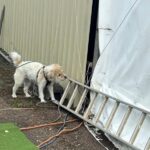
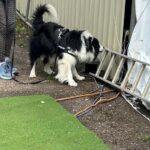
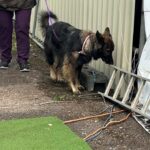
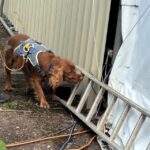
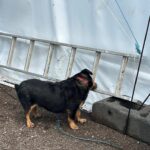
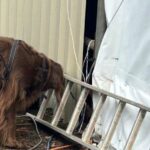

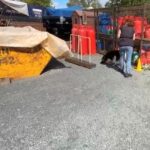
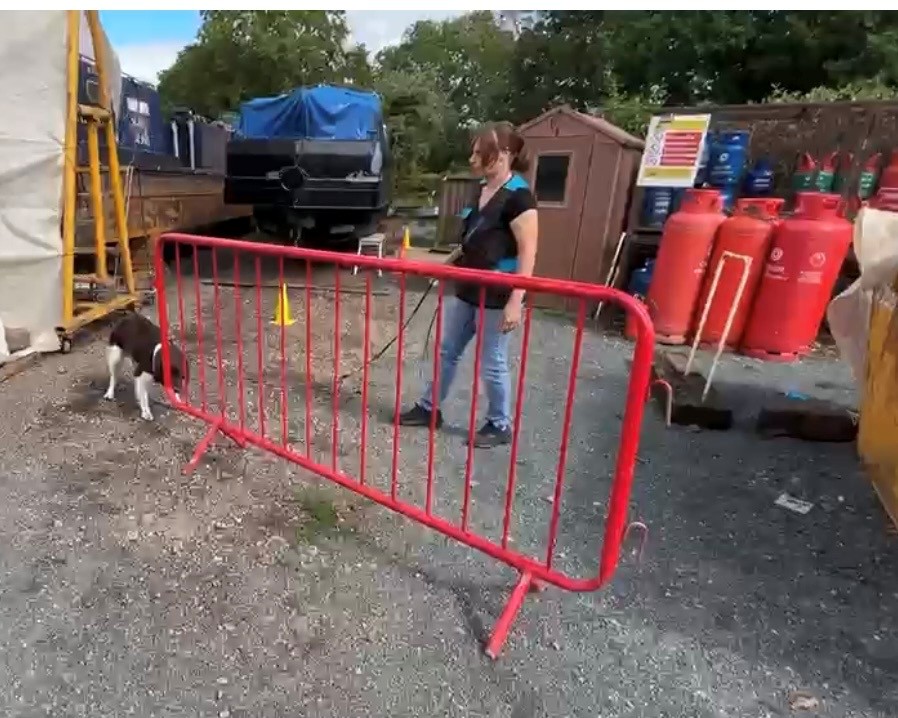
The photographs show the area that was set up for the search. The target odour was gun oil. It was spasmodically windy. I set the search so the target odour was near the threshold and the opposite side to the tarpaulin, so the dogs could locate without having to approach the tarpaulin if they were unsure, and would have their backs to it, on indication. Of all the seven dogs that worked the area, a couple of them were aware of the movement and sound, but all continued to work, locate and indicate. There was just one hide so no need to re-enter the area. Other areas were set up in a similar way.
This article is foremostly for Scentwork Enthusiasts/Sporting/Hobbyists (Pet Dogs)
Click Here to Join Nose First Dog Training (Skool Community)